


It’s that time of year, when we reflect on what has gone down for the last 12 months and dare to look at ahead at what may be in store. State of Tel Aviv and Beyond regular commentator, Ya’akov Katz, joins me to attempt the impossible; try to understand what had happened in Israel and what may be coming at us. We focus on the big picture; in particular, why Israelis are so divided and what may address these rifts going forward. A crisis of trust and values afflicts this country. But the difference with Israel from most other countries is that we exist on a knife edge. In a flash, on October 7, 2023, we went from being a strong, regional power to a nation attacked by a terrorist group that had become a well-oiled, armed, and disciplined military force. Since then Israel has regained its military footing, somewhat, but is a country more deeply divided than ever. And the vested political interests seem to be determined to keep it that way. We discuss some of the more spectacular political scandals and the increasingly illiberal conduct by members of the coalition government. This is an election year in Israel. Ya’akov and I agree that the future of Israel will turn on the outcome of this election….that is….if it even happens.
Reminder: Until midnight on December 31 (EST), our subscription special offer of $45 for one year is in place. On January 1, subscription rates go up and most of our content will be available to premium subscribers only. Please consider supporting our work. State of Tel Aviv is an independent enterprise. We depend on subscriber support to operate.
Happy new year to all.
Show your support for STLV at buymeacoffee.com/stateoftelaviv

Podcast Notes
Podcast on State of Tel Aviv and Beyond, discussing issues raised in this discussion with Ya’akov Katz.
Column by Ya’akov Katz published in Jerusalem Post, Friday, December 26, 2025.
Blurred loyalties in PMO are a danger Israel cannot ignore

After watching the three-part interview with Eli Feldstein, one of the central figures in the leak of classified intelligence documents to BILD and the broader Qatargate affair, a few things become clear.
First, Feldstein is a deeply problematic character. Second, these interviews were clearly intended to rehabilitate his image ahead of a looming court case. And third, his central argument is simple: he portrays himself as a pawn, knowingly or unknowingly manipulated by more powerful figures operating in the prime minister’s inner circle - including Prime Minister’s Office adviser Jonathan Urich, former Likud campaign strategist Srulik Einhorn, and ultimately allegedly Prime Minister Benjamin Netanyahu himself.
Some of what Feldstein says is hard to swallow. His attempt to cast himself as a passive bystander in one of the most serious national security scandals in years is not easy to believe. And yet, it is equally impossible to simply dismiss everything he says out of hand. That tension alone should set off alarm bells.
Because when allegations are this severe, and when they touch the very nerve center of Israeli decision-making, silence is not an option. Shrugging it off as spin by a defendant trying to save himself is simply reckless.
This leads to one unavoidable conclusion: Israel must conduct a serious, deep, and independent investigation into what happened here. Not only into the leaks themselves, but into how three people operating at the heart of the Prime Minister’s Office ended up working - whether knowingly or not - in the service of Qatar.
This is not a marginal scandal. It hits at the core of our national security and the public's trust in its government. If foreign interests penetrated the PMO, even indirectly, the implications are staggering. And if they did not, then the public deserves to know that as well. Either way, the truth must be reached.
There is also a broader lesson that cannot be ignored. Israel urgently needs clear rules and hard red lines. An adviser to the prime minister cannot be allowed to simultaneously serve other clients. The notion that someone can advise Israel’s most powerful decision-maker while also consulting for foreign governments, multinational corporations, or even tech companies is dangerous.
This principle must apply to the current prime minister and to anyone else who aspires to the job. Public service at this level cannot coexist with private interests. National security does not allow for blurred lines.


Without accountability, there can be no leadership
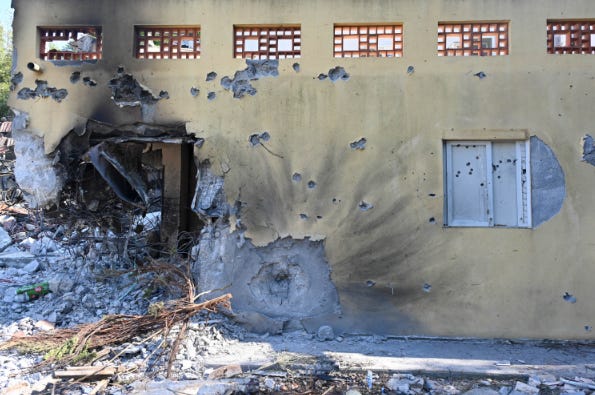
Accountability is famously a word in English that does not have a direct translation into Hebrew. There are phrases that attempt to approximate it, but none that fully capture its meaning – an obligation to accept responsibility, to answer for decisions that are made, and to face their consequences.
That absence of the word is not merely linguistic. It reflects something deeper about Israeli political culture and what has become a constant in the country: Try to avoid responsibility, deflect blame, and do everything to remain in power.
That deficiency helps explain more than the current debate over a commission of inquiry. It also explains something no less disturbing: how, despite the scale of the failures of October 7 and the war that followed, Israeli politics are almost exactly the same as they were before.
The same figures are once again vying for power ahead of the elections that will be held in the second half of 2026. The same names are in the polls, from the politicians currently in the Knesset to those who were there just a couple of years ago.
It would have been natural to think that, in the aftermath of the greatest disaster in our national history, new leadership would have already emerged. Someone – or even multiple people – would be electrifying the country, showing that things can be done differently and that there are alternatives to the current cadre leading us now or vying to lead us in the future.
But there aren’t, and this is striking. Israel is a country known for its innovation, creativity, and courage. It produces world-class entrepreneurs, military commanders, scientists, and civil-society leaders. Yet when it comes to politics, the system seems stuck.
Even the party that claims to represent the reservists who fought in Gaza and Lebanon over the last two years – a movement that should carry one of the most morally compelling voices today – is being led by a former failed politician. Not a new figure, but by someone from the same old political class.
The reason this is the case, I believe, is because systems that avoid accountability also suppress renewal. When failure carries no real consequences and leaders do not step aside, those watching from the outside are taught a clear lesson: Politics is not a path to service, but rather a place where staying on the wheel and in the game come first. It is less about what you do and more about how long you can be there.
It is through this lens that the Knesset vote on Wednesday must be understood. The legislation advanced this week, aimed at giving the government the ability to establish a commission of inquiry and appoint its members, stands in stark contrast to a state commission of inquiry – Israel’s highest investigative authority – whose composition is determined independently by the judiciary.
Both options are flawed and will be rejected by about half of the people. If the state commission is appointed, the half that does not trust the Supreme Court will not believe a word that the commission writes. If the government-appointed committee moves ahead, the same will happen, just from the other side. Either way, to some extent, Israel is stuck – there is no perfect option.
But beyond the numbers of who supports what, something even more basic is at stake and should be the determining factor.
Anyone detained by the police does not get to choose the detectives handling the case. When citizens appear before a zoning or planning commission, they do not get to select the panel that will hear their appeal. When people go to court, they do not get to decide who the judges will be.
In every functioning system, this principle is non-negotiable. The moment a suspect chooses the investigator, the investigation ceases to be credible.
Yet in this case, we are being told that the same ministers who failed in the years leading up to October 7 – and on October 7 itself – should determine who will investigate those failures.
In what world does this make sense? And in what reality does this lead to accountability? It doesn’t. With such a commission, there is only one result – evading responsibility.
Israelis deserve to know what went wrong before and on October 7. Not for political gain, and not for revenge, but to ensure that such a catastrophe never happens again. Accountability is not about settling scores. It is about learning, correcting, and preventing.
And we already have a clear indication of how a politically appointed commission would function.
All one had to do was listen to the first meeting of the committee tasked with appointing it. Instead of focusing on decisions taken in the years leading up to the war, the discussion immediately drifted backwards – to the Oslo Accords, to the disengagement from Gaza. Other MKs spoke of the need to investigate the judiciary and the attorney general.
Was there any serious discussion of the policy of containment crafted by the prime minister and adopted by successive governments? Any real reckoning with the Qatari cash transferred to Gaza with the approval of all prime ministers over the last seven years? Any willingness to examine decisions made at the highest political level within this government?
Of course not.
And that brings us back to the absence of renewal. When accountability is avoided, truth is delayed. When truth is delayed, leaders cling to power. And when leaders never step aside, new leadership cannot emerge.
The choice facing Israel, therefore, is not just technical and about what model of inquiry we should adopt. It is between two different approaches to power.
One seeks to uncover the truth, however uncomfortable it may be, with the purpose of rebuilding. The other is designed to protect those in power from the consequences of their own decisions.
After October 7, Israel does not need another round of blame or the re-litigation of historical events with, at best, tangential relevance to October 7. The country needs a reckoning rooted in independence and integrity. It needs accountability – precisely the one thing that cannot be obtained by those who fear it most.
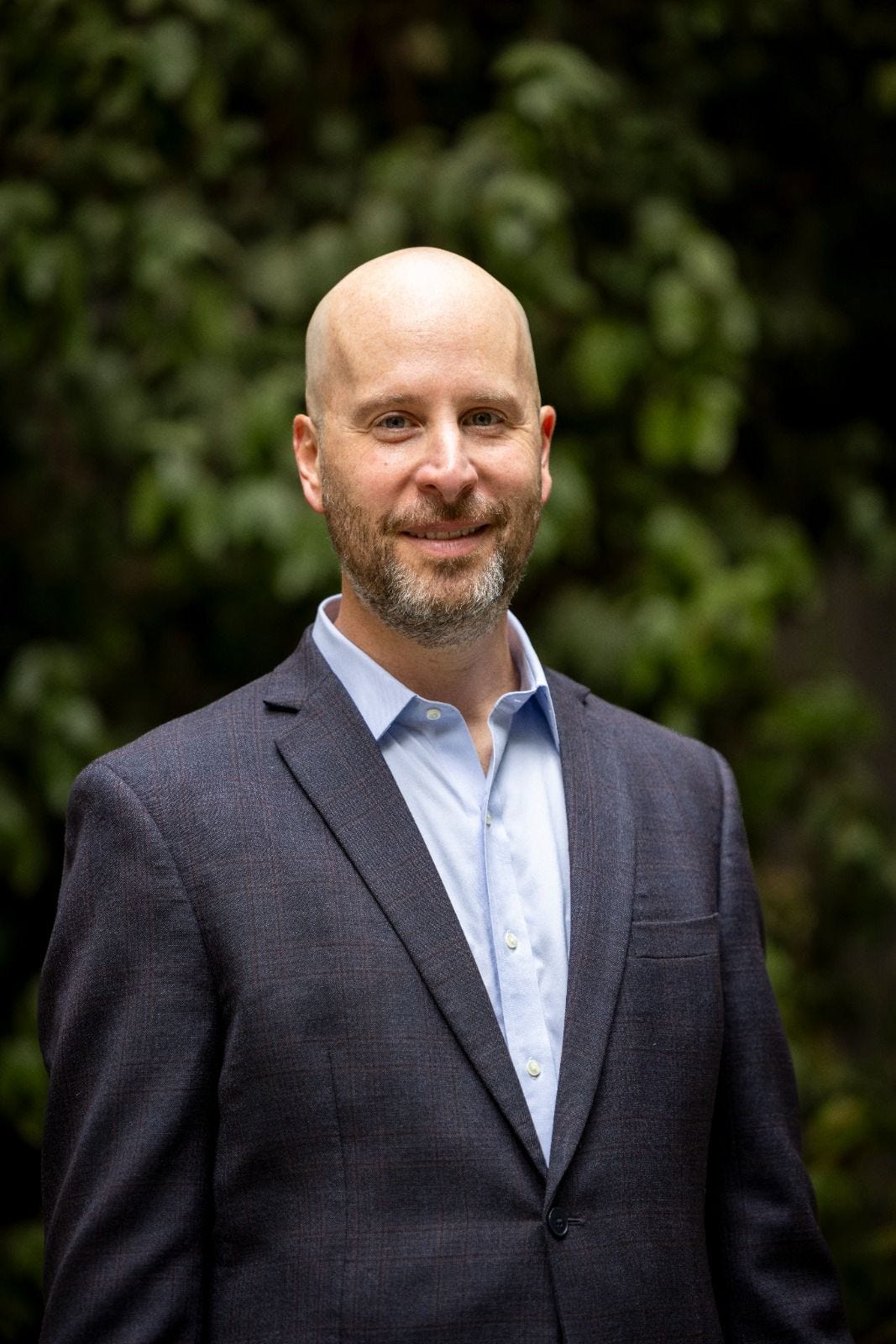
Yaakov Katz is an Israeli-American author and journalist. Between 2016 and 2023, Yaakov was editor-in-chief of The Jerusalem Post where he continues to write a popular weekly column.
He is the author of three books: “Shadow Strike – Inside Israel’s Secret Mission to Eliminate Syrian Nuclear Power”, “Weapon Wizards—How Israel Became a High-Tech Military Superpower” and “Israel vs. Iran: The Shadow War.”
Prior to taking up the role of editor-in-chief, Yaakov served for two years as a senior policy adviser to Naftali Bennett during his tenure as Israel’s Minister of Economy and Minister of Diaspora Affairs.
In 2013, Yaakov was one of 12 international fellows to spend a year at the Nieman Foundation for Journalism at Harvard University.
Originally from Chicago, Yaakov has a law degree from Bar Ilan University. He lives in Jerusalem with his wife Chaya and their four children.


