

The Wrap: London. Strasbourg. Israel. Reality?
People exist in a state of hopeful denial regarding an uncertain future, and present


Editor’s Note: The Wrap is going to be less tied to each week going forward and published when it seems appropriate. In general I will be moving towards publishing more written pieces. Subscribers have made that request repeatedly and it seems like the podcast market is becoming very crowded. It’s curious how consumer preferences change constantly in this wacky digital era. I do my best to keep up…..:)
Since October 7, I have found it quicker to produce podcasts. I am not and never did aspire to be a “news” outlet but these last few years have forced a very tight cycle of relevance on those of us trying to offer meaningful comment on Israel and the region. Even if you are commenting or analyzing, the reality on the ground is so rapidly changing that whatever you produce or write can be and is often outdated the next day.
Things in these parts aren’t exactly settled, but I am going to make a strong effort to strike more of a balance between written and audio-visual content. If you have requests or comments you’d like to share, please send them directly to me: vivian@stateoftelaviv.com
In this dispatch there are random photographs of roses. They were taken on my recent visit to Queen Mary’s Rose Garden in London’s Regent’s Park. I had the good fortune to be in the city in early June, which is when the roses are in peak form and bloom. I’m not a big flower person but….it seemed wrong not to go. The garden was beautiful but the ongoing unseasonal heat wave had taken a toll on the blossoms. They were looking parched and wilted, but still well worth the visit.

A Time-Out From Israel
Our original plan was to take a short holiday over Passover, which fell early this year. My daughter and I were ravenous for culture - in English. We needed a “time out” from more than two years of war and the accompanying stress levels. And so, we decided that a week in London was just the ticket.
President Trump, Prime Minister Netanyahu and the Iranian regime had other plans.
Several days before our scheduled departure, the Israeli government decided that while El Al - the larger of the only two airlines servicing Israel - would continue to fly, it would be on a very limited basis. Peculiarly limited. (Arkia is the smaller, second airline still flying to and from Israel at the moment.)
The routes to be serviced by El Al were reduced, as were the number of outgoing passengers (50) permitted to board each departing flight. Incoming aircraft, however, could be full to the gills. The stated rationale for this limitation was that it took more time to process passengers leaving Israel. Even if this is true, what the government is saying is that the lives of 50 passengers (plus airport support staff) may be risked but that is acceptable. I would have thought that a responsible public policy decision in these circumstances would be all or nothing. But, alas, no one consulted with me…….
What this also meant was that someone had to do the culling. Make the lists.

So - who were the fortunate 50? On what basis were they selected? Passover is a major travel period for Israelis, when about 15% of the country’s 10 million residents go abroad. Many families had planned and paid for holidays.
A few days before our scheduled flight at the end of March I received a notice from El Al confirming the bad news I had been expecting. I corresponded briefly with an acquaintance who sits high up in the C-suite at El Al who informed me that the 50 were selected on the basis of airline status and medical/humanitarian issues.
Weird. Cuz no one contacted me to inquire about the reason for my trip. It is unclear how they determined that I was not traveling for medical or other exceptional reasons.
I reached out to El Al media relations (a bit of an oxymoron) and was told that they were not speaking to anyone. Well, with the exception of the daily walkabout with major Israeli TV stations who were fed canned lines and video to broadcast.
No, no, I told the media boss lady. I would like to discuss the basis on which the lists are assembled.
She didn’t even nibble.
But here is what I can report. I have more than a few friends and acquaintances who travel constantly and, as a result, enjoy top tier status on El Al. During this delicate period two of my pals were booked on flights and their reservations were honored. They also reported - anecdotally - that there seemed to be a very large number of ultra-orthodox families with young children among the 50 special people on their flights. One of my friends even chatted up his fellow travelers. These particular folks were from abroad and spending a few years studying full-time in a religious institution in Israel. They were unaware of what status or privilege had pushed them to the top of the traveling class.
So my friend conjectured and it bears repeating. One phone call from an ultra-orthodox power broker to a person in a position to influence things would fix that snag in no time. In plain language, the likelihood is that the very influential ultra-orthodox/haredi political. machine found a way to ensure that their people were taken care of and able to fly to enjoy the holiday with their families abroad.
Prove me wrong. I invited El Al to do so and they declined.
These “little things” have become a pervasive part of life in Israel, particularly in recent years.

On Wednesday May 27, I finally flew with my daughter to London, where we spent one week. Renewed war nearly scuttled these plans as well.
It was a little touch and go in the week preceding our departure.
Would the war with Iran resume? Would Trump go in and “finish the job”, as he had been insinuating he might? And if that should transpire, would we make it to London? (Never mind the return.)
Yes. I was that self-absorbed. It happens after almost three years of solid wars and more than a few false starts. It takes a toll.
Our first day and night in London were magical. We stayed in an Airbnb in a lovely neighborhood in the north end of the city. A wonderful book store was steps from our temporary home. Everything, of course, was in English. So intelligently curated. Damn the Kindle! We bought heaps of books. The weather was perfect. Sunny and warm. In London. Good food. And no one spoke about war. No one was in uniform. No one mentioned how many young men fell in battle that day. No one talked about reserve duty or Jewish terrorists. Itamar Ben Gvir. Bibi Netanyahu. There were no street riots by ultra-orthodox men protesting the draft.
On the surface, it all seemed so – normal.
I know that London and the UK are a whole other level of madness, but for a moment, we enjoyed the illusion.
London and the Lido
I love London.
In ’84-’85 I did a post-grad degree at the London School of Economics and Political Science (LSE), which remains one of the high points of my life. In that year I learned more about intellectual rigor than in the other seven other years of post-secondary education I endured. Language and precision of expression were valued at the LSE. Intellectual curiosity was encouraged. And the emphasis was on quality of thought and argument, not quantity of pages read between lectures and seminars.
Sidebar: As an aside, among the superb plays I saw that week was We Had a World, by American playwright Josh Harman. I cannot recommend it highly enough. It’s in a small playhouse - Hampstead Theatre - and everything about it is just outstanding. The protagonist - based on real Josh - takes us from his life at age 5 to the present - mid 30s. It is an unsparing and touching study of the quirky dynamics that prevail in many families but with a decidedly Jewish flavor.
During his undergrad years, Josh moans at one point that he is expected to read a new Charles Dickens novel every week. That experience is one I share - the Dickens-o-rama. In my third year of studying English literature for my BA, I took a Dickens and a Shakespeare course - among three others. Each week we were required to get through a new novel in the Dickens canon as well as a Shakespeare play. I wasn’t the Cliff notes type. I did the heavy lifting. It was brutal. There were similarly outrageous assignments in my political science courses. The emphasis in higher learning in North America, in my experience, was on quantity over quality.
Contrastingly, at the LSE we would select one article to read from a long list each week. We were to show up in class prepared to analyze and defend - or attack - the thesis. In other words, we were expected to think and not just slog and regurgitate.
I studied at the LSE in 1984-85, the earlier Thatcher years. The coal miner’s strike was in full force. This battle was determinative of Thatcher’s remaking of Great Britain in ways previously thought unimaginable. Breaking the NUM - National Union of Mineers - the royalty, in many ways, of the UK industrial ecosystem - was a challenge that could only be undertaken – and won – by a green grocer’s daughter.
I lived in North London that year (very close to where we stayed on this trip - around the corner, in fact) and one of my roomies was a pal from Toronto, who remains a great friend to this day. Both swimmers, we would trudge several times each week, early, to do our laps at the Swiss Cottage pool. It was filthy. For real. We still have nightmares of swimming through clumps of hair and floating bandages. But we did it, because there really were no options in those days. These were the early days of fitness as a way of life, everywhere, and the UK was a touch behind in terms of facilities.
The striking coal miners were permanently installed outside Swiss Cottage tube station, as they were in many parts of London. Scruffy blokes, holding buckets, chanting incessantly: “Support the miners.” It was more of a demand than a polite request. The miners were fighting for their lives and livelihood and they were intimidating.
They were subsisting without wages, in what they perceived to be an honorable fight for independence and dignity. The “scabs” who continued to work in the mines were subjected to extreme violence and social ostracization. The NUM strike tore the UK apart.
On more than one occasion, I stopped to chat with the miners. I truly wanted to understand, from their perspective, the basis for advocating to keep unprofitable mines operational. At that time, coal was evil. A nasty pollutant being replaced by cleaner types of energy. This was the golden era of natural gas and nuclear. The market for coal was disappearing, rapidly. The miners with whom I spoke didn’t care about practicalities. They saw their vocation as a core part of the British way of life and national identity. If the mines were unprofitable, so be it. To shut down mines would end a way of life that had persisted for generations. It really was that straightforward for them.
Arthur Scargill, the leader of the NUM was a committed communist, or socialist, depending on how one defines such terms (as well as the phase of his life.) He led the NUM in what is widely regarded as the most significant industrial action in post-war Britain. Living through the reality of this strike - which was felt everywhere in the UK - was intense. I include this short video if you are interested in learning about this critical moment in modern UK history - or refreshing your memory. It is sympathetic to the miners but also very faithful to the facts.
OK. Back to the daily routine in London, ‘84-85.
After the swim, my buddy and I would then head to the LSE for study and fun in the City. Dinners were often a huge plate of chicken, peas and mashed potatoes, slathered in gravy. At Frank’s on Neal Street. Today it is a groovy shopping street. Not then. Gentrification was a word that did not yet roll off tongues. Franco – as we called him - welcomed us warmly several evenings each week. Two pounds and fifty cents. It was our only proper meal of the day. We’d manage until then – even post swim - with a biscuit and fresh fruit.
Satiated and tired, we’d amble from Frank’s to Trafalgar Square, catch our bus home and sit on the upper deck. We’d smoke one cigarette – it was allowed in those days. (Heck, people even smoked on the Tube!) Just one. It was a bit naughty and decadent. And fun and stupid. We were happy.
I just wish we’d known about the Parliament Hill Lido, which I “discovered” on this recent trip to London. (“Lido” is a term used in Europe to refer to an outdoor pool or beach area used for recreation.)
It’s a 60 meter outdoor unheated pool (so English – why not suffer a little if you can) open year-round. A stone’s throw from the famous swimming ponds on Hampstead Heath.
Damn straight I checked it out - on the afternoon of Friday May 29, in the midst of a heat-wave gripping London. That outing told me a lot about London today.
I took the bus from Belsize Park (where I stayed for part of this trip) to the Lido. At some point an invisible line is crossed, from upper middle-class north London to rough welfare neighborhoods on the other side of the heath.
Parliament Hill Lido (which is nowhere near the House of Parliament) is a community pool that was built in 1938. Of course, I wrote to my swimming buddy, dismayed: “How did we not know this existed?!?!?”
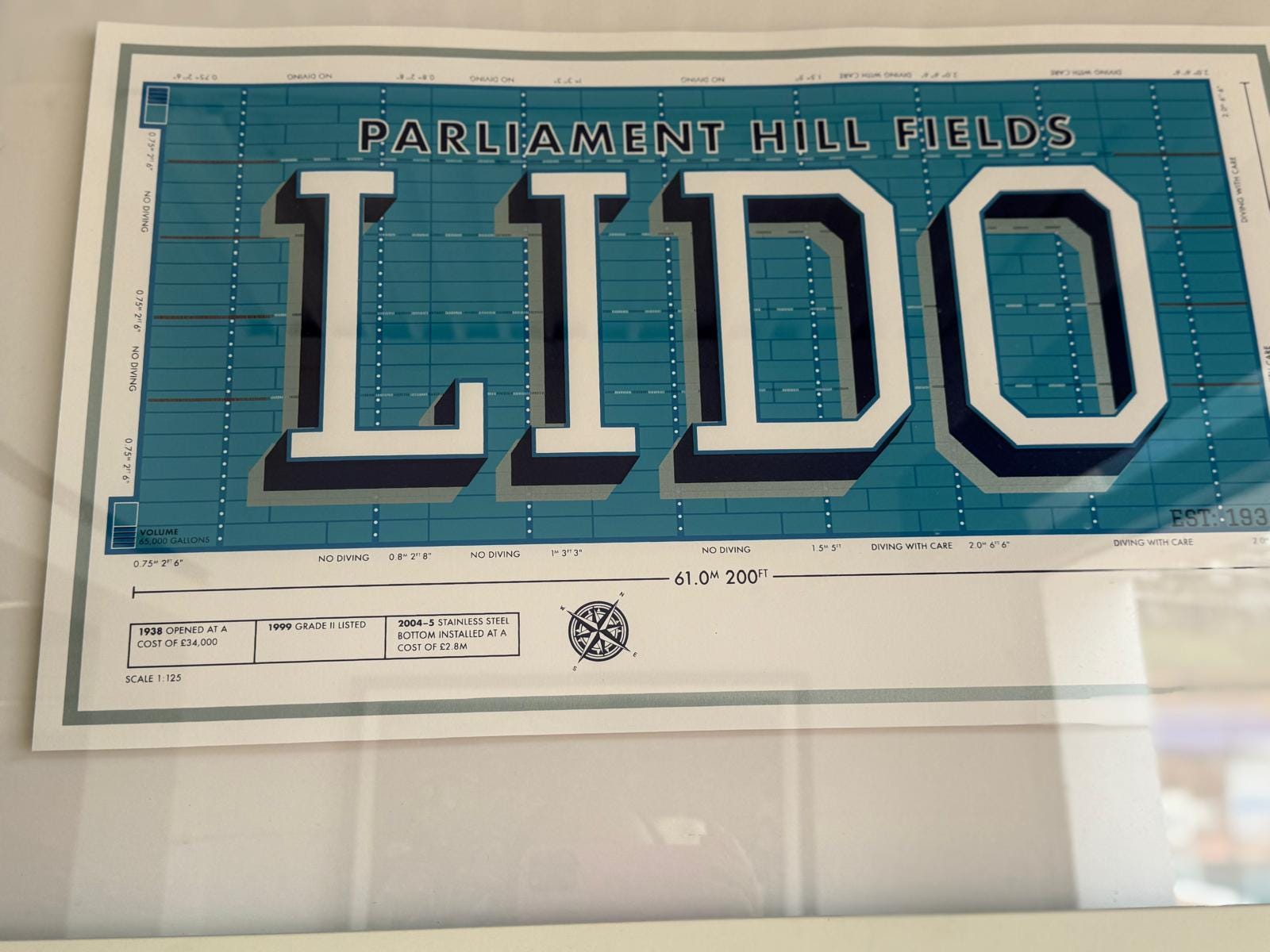
The pool was nice. In the middle was a large swimmer’s lane. I took a few moments to figure out how things are done. Each pool has its own particular “etiquette.” This one was brilliant. Like being on a multi-lane road. Slower swimmers stayed close to the rope. There was plenty of room for others to pass in either direction. Worked swimmingly, I must say.
I finished my laps just before the 1:30 pm break when the pool shuts for an hour and a half. A woman near me asked the lifeguard in heavily accented English (East European) about the schedule. She explained that mornings were the best time to come. In the afternoon – especially when hot – it’s full of teenagers and quite unruly, she said.
“Oh.” I said. “That bad?”
She gave me a “look.” Not unfriendly, but one that was loaded with meaning that I wasn’t quite sure of.
“It’s full of teenagers,” she added. “You don’t want to be around.”
“Aren’t they in school in the afternoon?”
“Today is the final day of their school break. But even still, the kids around here don’t go to school if it’s a hot sunny day. They cut class and come here.”
Hmmm.
I dried off and left. Outside the Lido a long lineup was already forming; people who wanted to be sure to get in for an afternoon dip. It was women covered in layers of cloth. Head to toe. They were each accompanying multiple children. All ages. I walked towards the line and eavesdropped. The older kids were speaking east-London accented English, laced with profanity. I’m betting the mothers did not understand what they were saying. All boys. I assumed that their young daughters were elsewhere, likely on account of not being allowed to appear in public in a bathing suit. It was mothers accompanying sons. Some older boys. The picture below is of the end of a line that was already long. About 100 people long - an hour and a half before the pool re-opened.
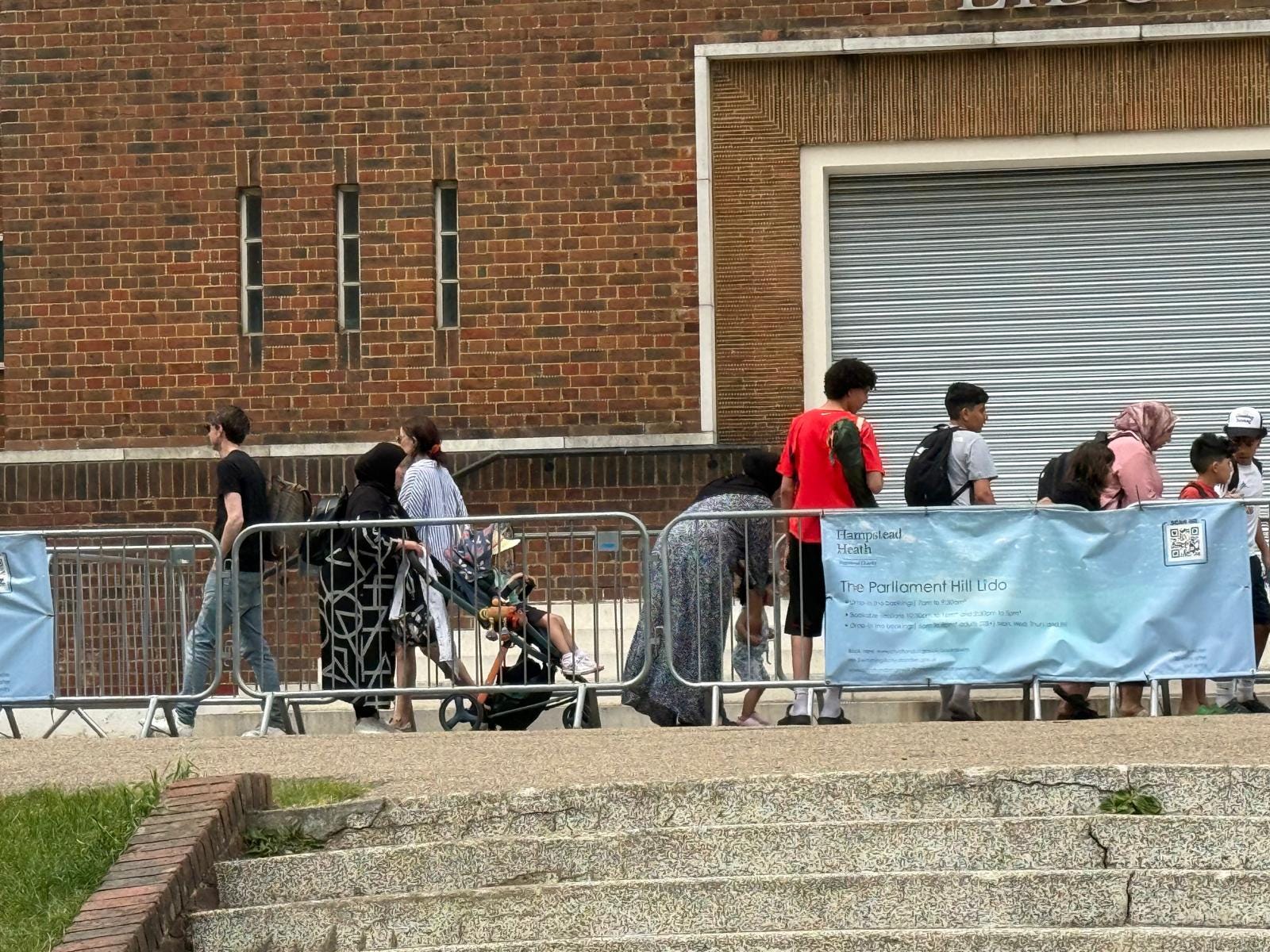
Upon seeing the line for the afternoon shift, the coded language used by the lifeguard about avoiding afternoons at the pool became clear.
This is typical of a recurring experience I had in London, Strasbourg and Germany. Discussions about sensitive topics - like the influx of Muslim immigrants and their impact on society - are conducted in code.
Strolling through central London one day, I walked past a large truck. The doors were open and inside was an officer busy at work with masses of equipment. There were about a dozen police officers standing around close to the van. I spoke at length with one. They are a roving unit of the Metropolitan Police working on the Live Facial Recognition project. It’s a relatively new program that has moved into full swing in recent months.
The big truck contains equipment that maps the face of every single individual walking by. Within seconds the image is run through their system, which contains facial images of 12,000 individuals believed to be in the London area and wanted for various alleged crimes. The numbers of wanted individuals nationally is many times larger.
While we chatted – and the officer explained the work to me – a beeper notification sounded and about six officers converged immediately on a man who had just passed us by seconds earlier. He was detained. That day alone, in the previous five hours, the officer I spoke with said eight or nine individuals had been similarly detained.
Even if someone passes by masked – and with sunglasses – their face can be mapped with 35-45% accuracy. Once the coverings are removed, of course, a more reliable identification is possible. As the officer said to me: “Things have become pretty bad here in the last three years. This program is helping a lot.”
There you go. He said so much without tripping any DEI wires.

As it happened, later that evening - May 28 - a clip from CCTV cameras in London last November went viral. It showed Dame Helen Mirren, the brilliant actress who also happens to be a vocal supporter of Israel, being accosted while walking with her husband in London.
This ugly episode reminded me of the hatred that is everywhere, it seems. The nice part of being in a new environment is that it’s not as obvious. Then again, London police have been doing their jobs of late. It is not an accident that throughout my week there I did not see a single kheffiyeh. Not a single sign vilifying Jews or Israel. None of the standard symbols of hate that were everywhere in this city for too long.
Truth be told, I had expected to encounter more incidents of overt hostility like that which had been directed at Helen Mirren. I do not wear outward signs marking me as a Jew or someone who lives in Israel. I blend in easily. Still, I stayed in an area with a significant Jewish population. I was in the vicinity of Westminster on a beautiful Sunday afternoon, when there are often pro Palestine and Hamas demonstrations. And I did not see a single protest, protester, a placard, nothing.
But here’s a post-script to the Helen Mirren incident. The resurfacing of that video generated a lot of buzz on social media. And Helen Mirren, speaking to the media earlier this week at a film festival in Sicily (where she received a lifetime achievement award) chose to address the Big Issue.
Mirren has long had a strong attachment to Israel, having visited for the first time shortly after the 1967 war. She has always understood that reality in Israel is complex, but was moved by history and what she experienced first-hand to support the state. You can read the full report on her interview here, but I will highlight some key bits.
“Evil forces are rising everywhere, even in a country like Israel,” she said. “How could you possibly repeat the actions of what was done to you as people to other people?” she added, presumably referring to the Holocaust and the current war in Gaza.
“The artistic community in Israel, the intellectual community in Israel, are so remarkable. I was born at the end of the Second World War, I grew up in Europe post Second World War and the realization in my parents’ generation of what had happened in the Holocaust was so profound, so important. Therefore, the creation of Israel was a very important moment, although maybe it was done in completely the wrong way, in the wrong place, I don’t know. But something had to happen after the horror.”
These observations are disturbing. Very disturbing. Especially so because they are spoken by a staunch friend of Israel and the Jewish people.
Dame Helen makes some strong insinuations in her comments with which I vehemently disagree. I have many profound misgivings with respect to how this never-ending war has been and is being conducted. But Israel has not committed genocide. Full stop. There is much to criticize and object to, fiercely, but the tendency to exaggerate and misstate has seeped into the comments of even Helen Mirren. Rather than being critical of her it behooves all among us who care about this country - and its soul - to pay careful attention to the shift in her views and tone. (And if you. missed my podcast the other day with Andrew Fox, when we discussed a very concerning Pew Poll about attitudes globally towards Israel, you may wish to listen here.
Dame Helen is correct in pointing out the very dangerous shift in Israeli political and social life. Under the leadership of Benjamin Netanyahu, Israel has transformed into an extremist nation promoting policies that the majority of Israelis oppose. Strongly. Yes, it’s complicated. And not. When ultra-orthodox anti-Zionists and thugs like Itamar Ben Gvir are the most powerful elements in society, well, things have gone very wrong. And they have. If we do not collectively address this careening reality, we may lose…..more than we have already.

Near the end of my one-week London sojourn I meet up with a friend for morning coffee. He’s a local. Born, raised, with a family of his own. Jewish. Zionist.
“What’s it like here?” (Translation: What’s it like being Jewish and living here?)
I am flitting about in tourist mode. I don’t see and experience real life.
My friend likens his life to that of a frog in a boiling pot, an overused but effective comparison. When things boil over he will likely leave but therein lies the question. When is it time? You know, time to leave?
What really struck me was how different the environment is in London and the UK than, say, the US or Canada.
“We are around 200,000 here in a population of 60 million,” my friend points out. “The focus here is less on Jews and more on the Islamization of British society, generally. Do we have British values? What are they? How do we preserve them? Do we preserve them?”
This is a very different focus from what North American society seems to fixate on. Jews.
In the U.S., of course, there are approximately 6-million Jewish Americans. They are well-established and prominent; some say that their success is way out of whack compared to their proportion of the population. We all know that line of reasoning and where it leads.
Canada has a Jewish community of approximately 375,000 in a population of approximately 43-44-million. (In the last decade, the population of Canada has ballooned from 35-million, primarily as a consequence of the Trudeau and Carney governments “open door” policies towards “migrants.” These days, the federal government is unable (or unwilling) to provide accurate numbers regarding population, legal immigrants, migrants, anything. Fact.)
In Canada and the US the focus is on Jews. Jews and their disproportionate power. Jews and their nefarious, subversive controls over society. Islamists (pro Hamas types) and “progressives” focus their hatred on Jews and Israel. They have succeeded in making the public “discussion” about Jews. Israel. And how evil they are.
In the UK the concern is primarily driven by the massive numbers of Muslim immigrants and the impact they are having on society, broadly. Yes, they are virulently hostile to Jews and Israel in the UK. And there, too, their views converge with the hardcore haters of the “progressive” left.
But there are different issues grabbing popular attention in the UK. In recent years, for example, the existence of grooming gangs – comprised primarily of men from Pakistan and India – has become known and is now openly discussed. Law enforcement and other institutional interests seem to have suppressed the dissemination of information about these groups – which targeted young British girls for brutal rape and sexual assault. This has been going on for decades.
And then there’s the case of Henry Nowak, which also blew up while I was in town.
Henry Nowak was an 18-year-old university student stabbed to death last December by 23-year-old Vickrum Digwa, a Sikh man carrying a ceremonial dagger as well as a second large knife, which was used to stab Nowak multiple times. To read a decent chronology of events of the case, I suggest reading the article, below.
Henry Nowak case: What happened and why has it caused national outrage?

On Monday June 1, while I was in London. Digwa was sentenced to life in prison with a minimum time to be served of 21 years. But what set off riots and rage in the UK that week was what happened as Henry lay dying.
Digwa’s defence was that Nowak had provoked the stabbing by uttering a racial insult. Whether or not that is true, when the police showed up and saw Nowak lying on the ground, bleeding profusely and complaining that he had difficulty breathing – multiple times – they decided to handcuff Nowak. And they watched him die. Law enforcement, it seems, has been so totally brainwashed by DEI gobbledygook drilled into them by their official training, that they were more concerned about a possible racial slur than a dying man.
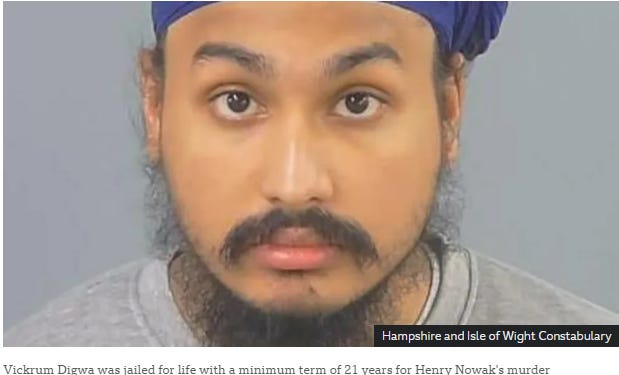
As Henry Nowak’s father stated after the verdict - his son had been treated by police in a manner that was “inhumane and degrading.”
“Henry did not die with dignity,” he said, further noting on the courthouse steps that the contrast between how Henry and Digwa were treated was “unbearable.”
This heartbreaking case dominated public discourse while I was in London and received international coverage. How had society come to such a point, so many asked, that an alleged racial slur - and not the ebbing life of a young teen - was the dominant concern of the police?

Strasbourg and Berlin
I write this on the train to Berlin following a lovely three-day visit to Strasbourg, home of the European Parliament, gateway to the Alsace-Lorraine/Black Forest region, and a jewel of a city.
Sentimentality drew me to this place. More than a few decades ago, I had planned to study for one year in Strasbourg, focusing on improving my French and German. Kehl, Germany is a hop away across the river. Paris did not appeal to me, even though I was accepted at the Sorbonne. I was looking for something offbeat. Strasbourg checked my boxes.
I ended up studying that year at the LSE. I remained curious about the city I had set my heart on and never visited. And so, I went. (Short video below of the grand, central cathedral.)
Greater Strasbourg is home to approximately 1 million people. Within the city boundaries it’s closer to 300,000. Surprisingly, there is a large Jewish community, around 16-20,000, with roots going back to medieval times. There is a much larger Muslim community, with guesstimates pegging it at 15-20% of the one million inhabitants. The French government does not collect statistics according to religion or ethnicity – officially – so precise figures are unknown.
At the Friday farmer’s market in the center of town, I stocked up on fresh berries and fruit. The young man selling the produce responded to my less-than-smooth French in Canadian accented English. Turns out he’s from the Toronto area. A strapping fellow, 6’5”, he married a local woman and helps out his in-laws now and then on market day. In spite of presenting physically as being more Nordic warrior, he is Jewish. That came out in conversation, as we were catching up on events of the past week in Canada. And Prime Minister Carney. And Jews. And he seemed so well-informed. Engaged.
“Are you Jewish?”
It never fails us, that ability to find one another in the unlikeliest of places.
His mother is Jewish. His father is gentile. He identifies as being Jewish and was keen to speak about the whole Jewish thing. Members of his extended French family, he told me, are cautioning him to keep quiet about that. No one needs to know. He is uncomfortable, not wanting to comply but uneasy about the suggestion – that he should, you know, hide. Conceal who he is. The Strasbourg Jewish community, he tells me, is very strong and cohesive. But he is also hearing that many are planning to leave. To go where is unclear.
Sidebar: There are 16-20,000 members of the Strasbourg Jewish community, which dates back hundreds of years. We know that because a local priest chronicled the arrest of the 2,000 Jews living in Strasbourg on February 13, 1349. It was the height of the bubonic plague (Black plague) in Europe and Jews were a convenient scapegoat across the continent. The disease that is believed to have resulted in the deaths of 40-70% of the population of Europe was attributed to the dark arts practiced by the Jews. In Strasbourg, as elsewhere in Europe, it was alleged that they had poisoned the wells.
And so, on Saturday February 14, 1349, the Jews were taken to their cemetery and forced to stand on a specially built wooden platform. Those accepting baptism were spared. Many young children were snatched from their parents and forcibly baptized. Most - it is estimated that 2,000 people - were burned alive; a spectacle undertaken and watched by the townspeople.
During the Holocaust, contrastingly, 90% of the community’s Jews reportedly survived. I have no idea how and why this minor miracle transpired but will surely look into it on my next visit.
Strasbourg is one of the prettiest places I’ve ever visited. Locals enjoy a high quality of life. Bicycles are as ubiquitous as in Amsterdam, with wider lanes. As in so many European cities, public transit is accessible and efficient.
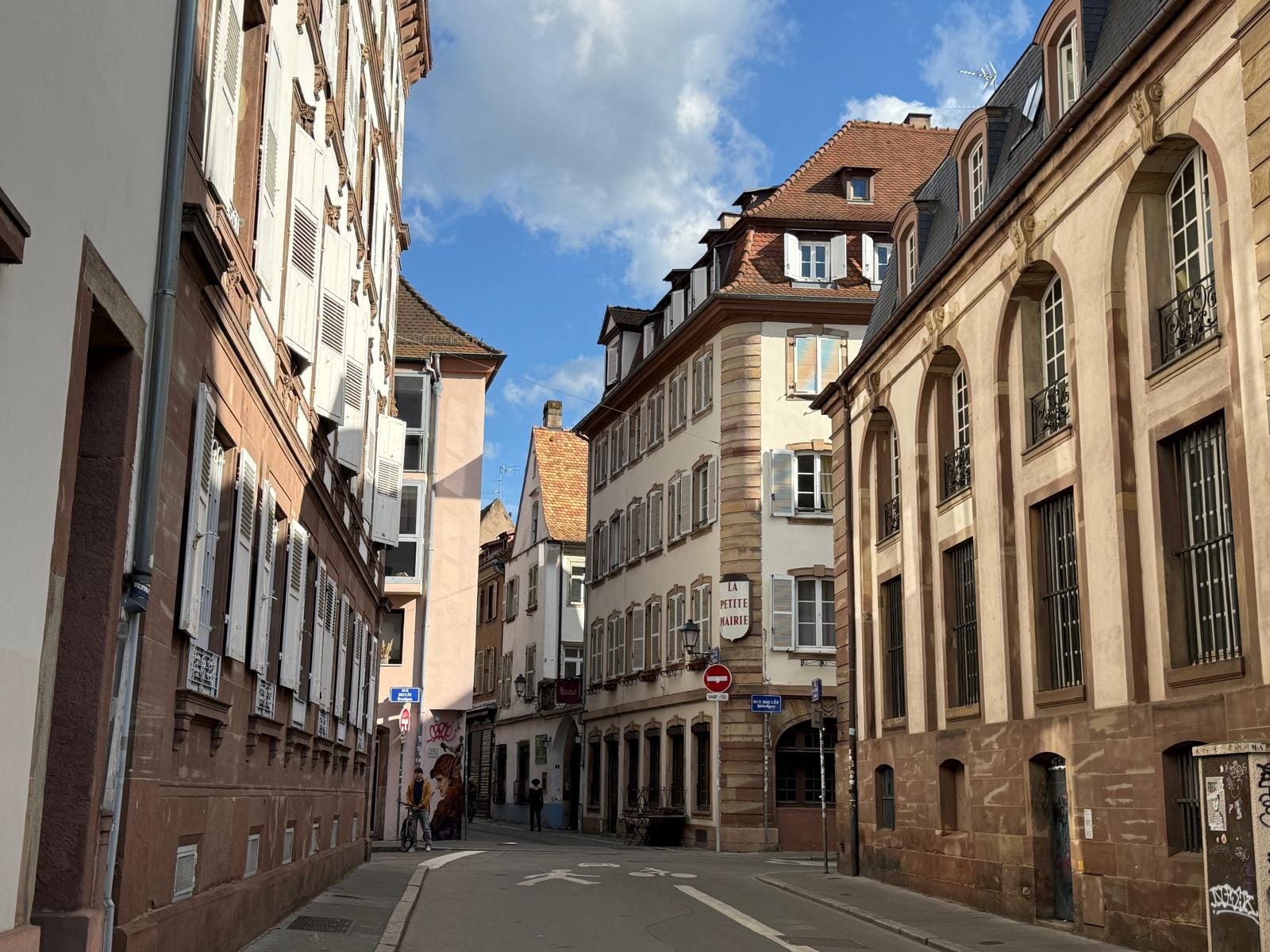
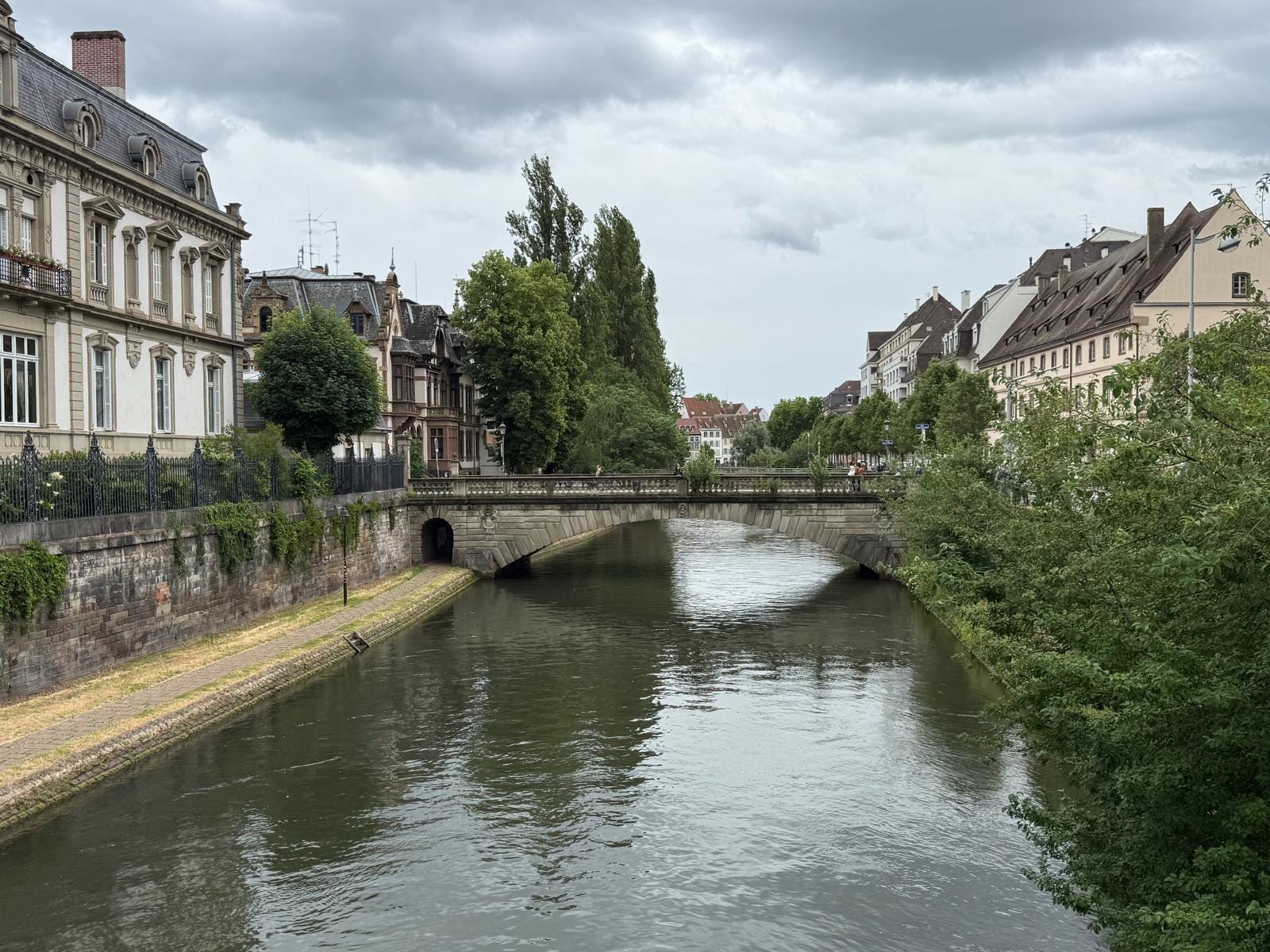
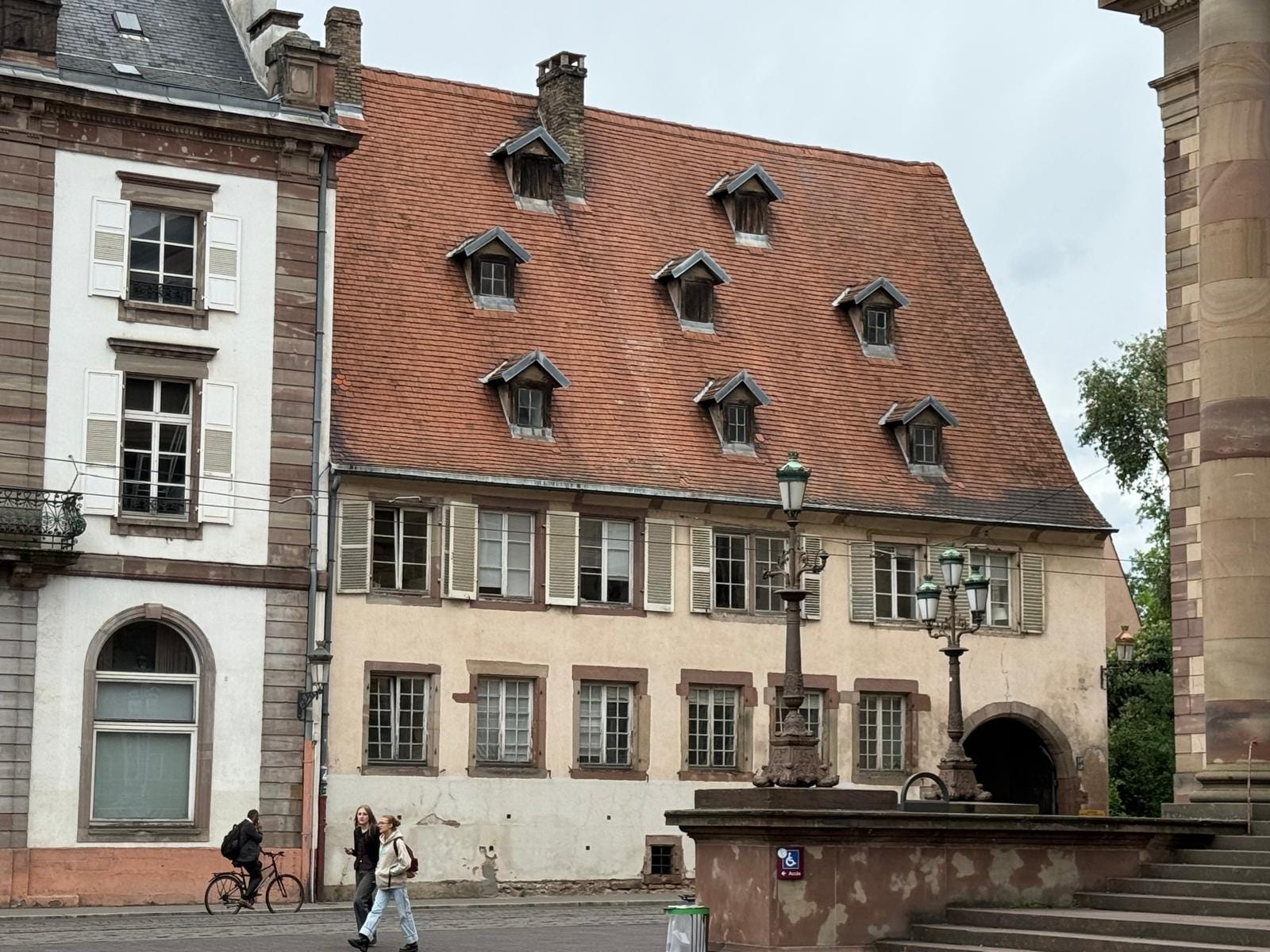
Until a few months ago, my Canadian friend told me that there had been regular “Free Palestine” demonstrations, but that has tapered off. Approximately 20% of Strasbourg’s population is Muslim. There are no reliable statistics I came across regarding the “migrant” demographic, which is often a euphemism for “illegal”. However, when I arrived at the train station in the early evening, I decided to walk the half hour to my hotel. The first ten minutes or so were iffy, requiring the running of multiple gauntlets of African men, hanging out in large groups, just watching the world go by. They sat on park benches. Stood around on sidewalks. This ambience soon transitioned to tattoo parlors and low-end booze cans and, eventually, to what one expects to see in a pretty spot like Strasbourg, with its unique Alsatian architecture, a unique blend of French and German styles which, somehow, works. Wrought iron balconies fitted with perfect little flower boxes, café habitues sipping coffee, wine, smartly turned out. Pretty, delicately arched bridges traversing river branches. And the heavy, Germanic structures, built with thick, exposed wooden beams.
Strasbourg is also home to one of the largest mosques in Europe.
The Canadian guy told me that in recent months, German border police have begun to board every train crossing over into Kehl from Strasbourg to check passports. The reasons are obvious.
And indeed, as soon as the train I was traveling in to Berlin arrived in Kehl, two German border police walked through the car, looking carefully at each passenger and checking their documents.
(Trust me. I thought exactly what you are thinking as you read this…..)
Germany is waking up. A touch late, perhaps, but they are not messing around with the Islamist threat any longer.
If you missed my piece on dining out at an Israeli restaurant in Berlin, dropped earlier this week, you can read it here.

Back to Reality?
I am determined to finish up this dispatch and send it out today, Saturday. Indulge me briefly as I try to explain the insanity to which I returned.
My little corner of the western Negev is. tranquil and beautiful, as always. Deceptively so. But Israel is convulsing. Constantly.
In the north. Hezballah continues to pound civilians with rockets. The Lebanese government is incapable or unwilling to take charge. Israel is denounced internationally for “illegally occupying” Lebanon. The fact that we are responding to constant unprovoked attacks is somehow irrelevant.
Iran. There is a deal. There isn’t a deal. Missile strikes. Ceasefire. It is impossible to keep track of the whiplash diplomacy of President Trump. His “junior partner”, Netanyahu, is eviscerated. The two alpha male pals have reportedly had some heated exchanges in recent days and weeks, but we are to be reassured that all is well and they were just carried away with a little verbal roughhousing.
All week long Bibi’s ultra-orthodox, anti-Zionist coalition partners blocked major roads, tying up traffic and life. These men are protesting the arrest of their brethren who have been arrested for draft dodging. This is Bibi Netanyahu’s Israel, a country in which 15% of the population opposes the existence of the state and yet accepts all manner of economic resources, while refusing to participate in defending the country. (I acknowledge here the 3-5% of haredi men who show up to serve each year. A damning statistic.)
Another 10% of Israelis are avowed supporters of Minister of National Security, Itamar Ben Gvir, an extremist at best, a terrorist at worst. Followers of Ben Gvir and the haredi political parties constitute approximately 25% of Israel’s population of 10-million. This means that 2.5-million of the country’s 8-million Jews are full-on extremists. And that scares the bejeezus out of me and many others.
This is what is at stake in the elections that, by law, must be held before October 27, 2026. I would not be at all surprised if Netanyahu attempts to “postpone” the elections, because of whatever security crisis grips the nation at that time. It is a notion that was unthinkable even a few years ago but is no longer. I have confidence in the prime minister and the gutter advisers who remain loyal to him that they would create an opportunity to attempt such subterfuge, whether legal or not.
The contrast between the comfort and serenity of my immediate surroundings and the extreme chaos swirling around me - and millions of others - is disconcerting, to say the least.

And the positive note on which I will wrap this wrap? Well, dark Jewish humor is the best I can do. But it’s pretty good.
On Thursday evening, there were three big concerts in central Israel and, well, it’s Thursday. The equivalent of Friday in Europe and North America. Everyone is going somewhere.
And so hundreds of ultra-orthodox, anti-Zionist young men decided to block all three major north-south arteries in the country, bringing everything to a halt. As usual, they were protesting the arrest of their draft-dodging friends.
This video of what ensued one one stretch of highway……where people were stuck for hours….captures the best - and worst - of Israel. I mean - where else would this happen?!?!?
State of Tel Aviv and Beyond editorial assistant and social media maven, Maya Naftolin, brought this video to my attention Saturday afternoon and quickly got to work putting in English subtitles. In addition to the English notes it helps to understand two things: 1) Hiriya - which is where these drivers were stuck - is a landfill and recycling plant located in the Tel Aviv area. It’s stinky around there; and 2) “Chaim shelli”……which woman filming says to another sitting in a folding chair…is an overused Hebrew expression meaning, quite literally - my life. But it is a catch-all…..meaning, you’re my everything, the best. You rock my world.
At the beginning of the clip haredi young men are walking between cars and challenging the drivers they are blocking to explain why they want the ultra-orthodox to be drafted into IDF service? The audacity. The shameless sense of entitlement from these men. I have no words.
I also would like someone to please tell me why they are always carrying plastic bags? Why?
We translated what we thought were key bits of the dialogue - the clip is choppy and ends abruptly but is a great snapshot of the gridlock and chaos that is a perfect metaphor for the state of Israel these days.
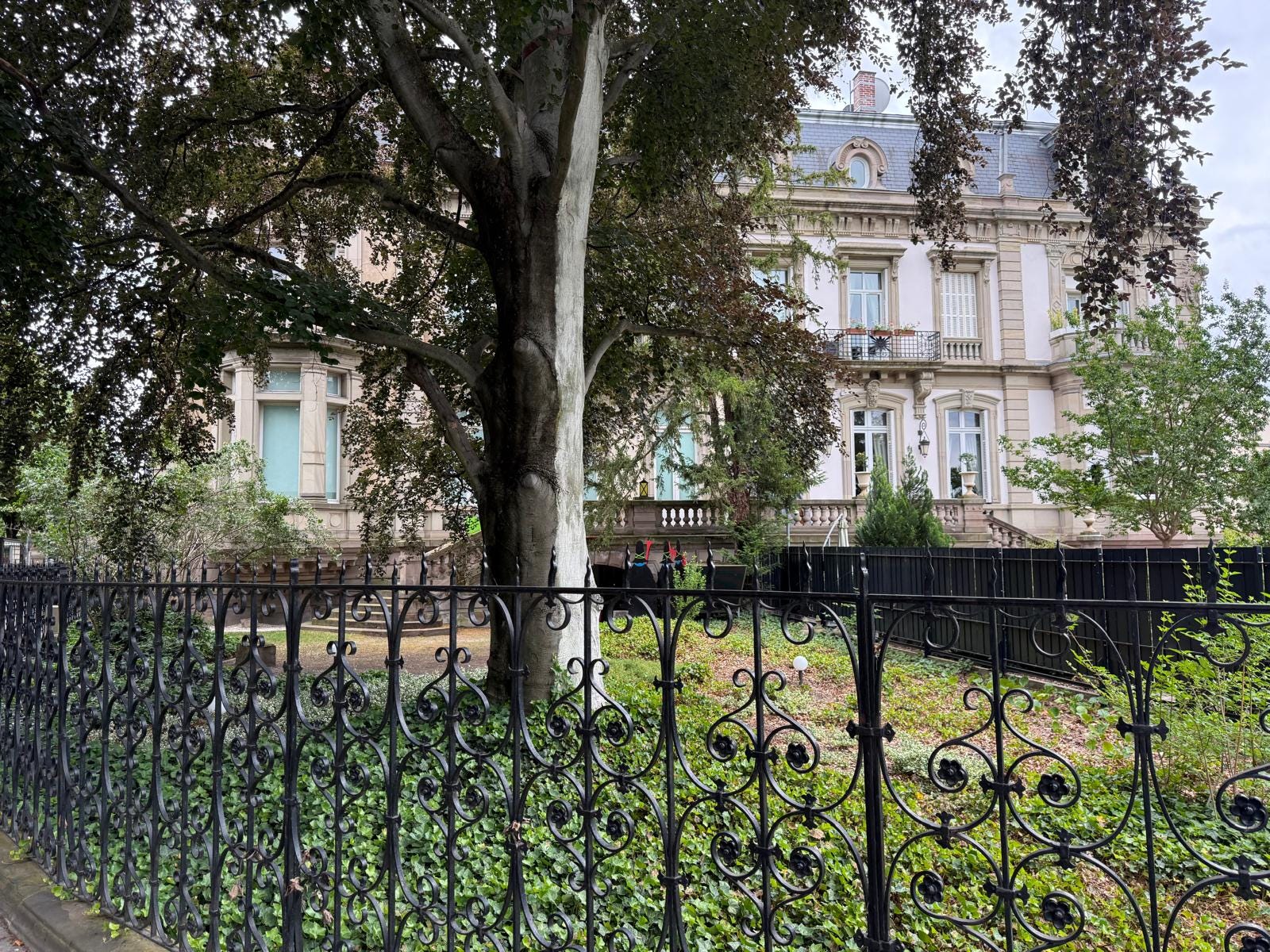
Just another beautiful corner of Strasbourg I had to share……
Show your support for STLV at buymeacoffee.com/stateoftelaviv

Great update. I lived in London 1990-92 (just in time to experience the waning days of Thatcher's reign) and totally understand what it feels like to return as a visitor decades later. Keep it going Vivian, with elections this will be another wild year in Israel.
Bravo most interesting read this week
Never stop writing