

A Brief Reflection on the "Why" of Antisemitism
And a peek at what lies ahead

May 2022 to December 2025
When I founded State of Tel Aviv in May, 2022, I was committed to bringing subscribers a taste of what is experienced by those of us living here. As with so much in Israel, day to day life is paradoxical, layered and complex. It’s also simple and straightforward. People here live. Hard.
Several months after our launch Election #5 was upon us and the results shook Israeli society. The resulting coalition – which included the ultra-orthodox parties and right wing factions that are quite extreme – shocked many. As did the immediate introduction of aggressive judicial reform legislation – which was actually about so much more. It was a re-engineering of the foundational institutions and ethos of the State of Israel.
We covered that turbulent period closely, before being hurled into the Hell of October 7, 2023.
The last few years have been intense. Even the”tough as nails” founding generation of Israelis says that the challenges and hardships facing the nation today are unprecedented. These are the people who experienced ‘48, ‘67, ‘73. The First and Second Intifadas. Their alarm should concern everyone who is invested in the future of Israel.
Now that we have a ceasefire, sort of, and can breathe, a little, I am able to report and write more expansively about the issues of life. Not just the immediacy of the moment.
Going forward, State of Tel Aviv and Beyond will modify its content (from the war-time focus) to suit the moment and get back to fulfilling our original vision of publishing longer form written work and podcasts. I want to tell the stories behind the headlines. And there is a lot to tell.
We are not a breaking news site and have never aspired to compete in that space. But since October 7, everything has been experienced with hyper-torqued urgency. There was almost no opportunity to pause and reflect. It often felt like we were breaking news, no matter what we did.
So – Where to From Here?
We are pivoting to do some longer documentary-style podcasts. These will be interspersed with what you have become accustomed to since October 7.
Earlier this week, we dropped the first of a two-part series focusing on antisemitism in Canada, with an unwavering look at a recent violent attack on Toronto university students and an invited speaker. We also shone a strobe light on the Toronto Police and the Chief, Myron Demkiw. Part 2 of this mini-series – when I really take the gloves off – will be published early next week.
It’s a scorcher.

We certainly live in interesting times. And I do not, unfortunately, believe that “it will pass.” Because it won’t magically dissipate, this tsunami of Jew hatred.
When I hear comments like that - “it will pass” - it reminds me of many things, including a talk I gave at a Toronto synagogue in February, 2020. It was a bitterly cold night and even still the turnout was great. Concern about Israel was sharp. We were in the midst of an unprecedented period of political instability, having had two elections the previous year and we were just a few weeks away from the third round, which was on March 2, 2020.
People everywhere were struggling to understand what the heck was going on.
Relevant background: For several years at that time, I had been demonized in certain Canadian media outlets. They were fed the lies they chose to publish from various government sources, always anonymous. My penultimate transgression - alleged - was that I had been “disloyal” to Canada during my service as Ambassador to Israel. There were no facts to support this slur, lifted straight from the Protocols of the Elders of Zion, the bible of 20th century jew haters.
The “anonymous sources” just fabricated lies to suit their agenda. Pure fiction. Official Ottawa lapped it up. “Respectable” media republished the garbage.
What really bothered these Ottawa types, though, was that I was Jewish. That I supported the existence of the State of Israel. And that I did so confidently and with a strong knowledge base.
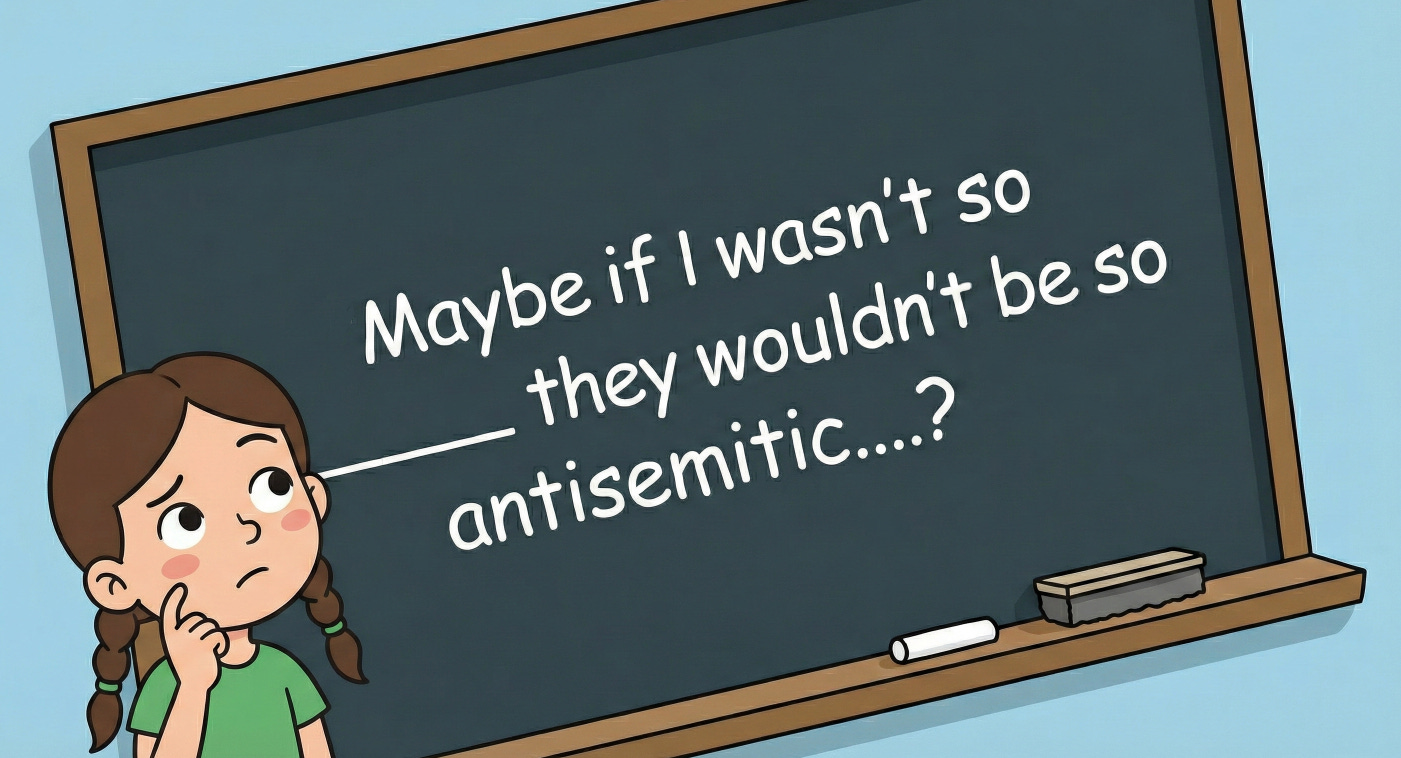
Back to the room in the synagogue on a cold night in February, 2020: In the Q and A part of my talk, a man asked me this: “Don’t you think that by staying in Israel and living there and not returning to Canada when your service as Ambassador was finished - that you give “them” more reasons to hate “us”? That you fuel the fire?“
For real.
In other words, he was saying, perhaps the reason that there was and is such entrenched antisemitism in so many public and private institutions - including the senior federal bureaucracy - is because……what? Because I live in Israel?
I responded by assuring the man that those who were inclined to demonize Jewish Canadians and accuse me, baselessly, of dual loyalty or, more often - outright disloyalty - that they would hold those views regardless of personal decisions I made.
Furthermore, I said, no other Canadian has been held to account in this manner. Many former diplomats and senior bureaucrats live in countries in which they had served. It has never been raised as an issue of concern. Au contraire, such “relocations” have often been celebrated as a reflection of Canada’s tolerant, inclusive national character.
I thought the question was so telling, and so sad. He was still thinking that - maybe if we were - a little less like this and a little more like that - that antisemitism in Canada would, somehow, disappear. Maybe, if I had returned to Toronto, senior public servants would not be so, antisemitic.
I wonder what that man thinks today.
This strained tolerance of Canadian Jews is evident in many other countries these days, including the U.K., Australia and the U.S. Americans have long nursed this notion that their society is “exceptional”, having been seeded by a revolutionary ideology based on ideas rather than religion or tribe or ethnicity. That belief - in exceptionalism - also extended to the American Jewish experience.
In recent months, quite a few friends have written to me asking if the Canadian Jewish experience might be a forewarning of what may transpire in the U.S.. In short, my response is a hard “no”. The two countries are different in so many important ways, as are their Jewish communities. Canada and the experience of its Jewish population are both much closer to what prevails in Europe than America. Having said that, I am confident, sadly, that life for Jews in both countries will change dramatically in the coming years, and not for the better.
And I can also state - with supreme confidence - that this outcome has absolutely nothing to do with my decision to remain in Israel after my posting as Ambassador.


I leave you today with my most recent column published in today’s National Post, in which I look at the surreal “Doha Forum” convened last weekend in Qatar’s capital, as well as the impasse that has stalled progress in implementing the Trump Peace Plan between Israel and Hamas.
We’ve included the first few paragraphs of the NP column. To read it in full please click on the link, below. By signing in you may access a limited number of articles in the NP each month, on a complementary basis.

Phase 1 of the plan called for the return of all 20 living and 28 murdered hostages in Hamas captivity. It was expected that this phase would wrap up quickly and that the parties would then engage in the much tougher work of Phase 2.
This is when Hamas would lay down its arms and relinquish power. An “International Stabilization Force” (ISF) would oversee disarmament and all security matters. And a “Board of Peace” — chaired by President Trump — would manage a Palestinian-led committee responsible for governing the Gaza Strip.
Today, the remains of all but one hostage — Ran Gvili — have been returned. Phase 1 is stalled. Hamas has consolidated its continued hold on power. Few countries have shown any real interest in putting boots on the ground to participate in the disarming of Hamas.
This impasse has prevailed now for two months, and President Trump is determined to break it. Among other rumblings from the White House, Trump has invited Israeli Prime Minister Benjamin Netanyahu to Mar-a-Lago for a visit on Dec. 29, which is believed to be focused on jump-starting the administration’s marquee foreign-policy initiative.
And on Wednesday, Mike Waltz, United States ambassador to the United Nations, said he met with top Israeli officials to reinforce the American position: Hamas will be disarmed.

Such troubling times. Thank you for all you do.
I just read your post. I am sorry that got that question from a member of the audience/from our own community back in Feb. 20. I see something similar from anti-Zionist Jews all to often. Someone in NYC posted, if we did not have Israel life would be better for us. Are they real?? We both know, if we did not have Israel, life would be worse. FULL STOP.
Enough of us having to always apologize for not being up to a higher standard than the rest of the world. We bring light into the world, while those who oppose us bring darkness and blame us for their failures, as it is so much easier than trying to make themselves better human beings. That is the simple truth. Be well.